






Radiology
Medical Services
Our Radiology Services
- Advanced Imaging Technology: We use the latest in imaging technology to ensure that our diagnostic results are as accurate and detailed as possible.
- Expert Radiologists: Our radiologists are highly trained and experienced, providing you with expert interpretation of your imaging results.
- Patient-Centered Care: We prioritize your comfort, safety, and privacy throughout your imaging procedure.
- Fast, Reliable Results: We understand the importance of timely diagnosis. Our imaging processes are efficient, and our team works to provide fast, reliable results for your physician.
- Comprehensive Services: We offer a full range of imaging services to support a variety of diagnostic needs, from routine checks to complex examinations.
- Convenient Appointment Scheduling: With flexible scheduling and minimal wait times, we make it easy for you to get the care you need.
X-Ray
X-ray imaging is one of the most common and widely used diagnostic tools. We use the latest digital X-ray technology to help diagnose fractures, infections, lung conditions, and other health issues.
- Bone and Joint Imaging: Diagnosing fractures, arthritis, and joint conditions
- Chest X-Rays: Identifying lung infections, pneumonia, and heart problems
- Abdominal X-Rays: Evaluating abdominal issues like bowel obstructions and digestive problems
Ultrasound
Ultrasound uses high-frequency sound waves to produce images of internal organs and soft tissues. It is a safe, non-invasive procedure that helps in evaluating conditions related to the abdomen, heart, and blood vessels, as well as during pregnancy.
- Abdominal Ultrasound: Evaluating organs like the liver, kidneys, and gallbladder
- Pelvic Ultrasound: Assessing the reproductive organs in both men and women
- Cardiac Ultrasound (Echocardiogram): Monitoring the heart’s structure and function
- Obstetric Ultrasound: Monitoring the development of the fetus during pregnancy
CT (Computed Tomography) Scan
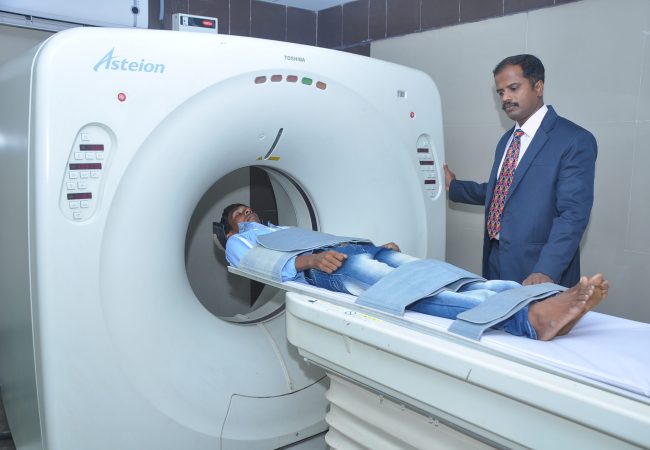
CT scans use a series of X-ray images to create detailed cross-sectional images of the body, providing a comprehensive view of internal organs, bones, blood vessels, and soft tissues. This is especially useful for detecting cancers, injuries, and other complex conditions.
- Brain CT: Diagnosing neurological conditions such as stroke, tumors, and trauma
- Chest CT: Identifying lung diseases, infections, and cancers
- Abdominal CT: Evaluating digestive, kidney, and liver conditions
- CT Angiography: Imaging blood vessels for blockages or aneurysms
MRI (Magnetic Resonance Imaging)
MRI uses powerful magnets and radio waves to create detailed images of organs, tissues, and bones. This non-invasive procedure helps doctors diagnose a variety of conditions, particularly those related to soft tissues.
- Brain MRI: Assessing neurological issues, including brain tumors, strokes, and multiple sclerosis
- Spine MRI: Diagnosing herniated discs, spinal cord injuries, and other spine-related issues
- Joint MRI: Evaluating soft tissue injuries in the knees, shoulders, hips, and other joints
- Abdominal and Pelvic MRI: Detecting tumors, cysts, and other abnormalities in internal organs
Mammography
Mammography is a specialized X-ray technique used for breast cancer screening and early detection. It helps in identifying abnormal growths or changes in breast tissue that may require further examination.
- Screening Mammograms: Detecting potential signs of breast cancer in asymptomatic women
- Diagnostic Mammograms: Further evaluation of an abnormality found in a screening mammogram
Fluoroscopy
Fluoroscopy is a type of real-time X-ray imaging that is used to observe moving body structures. It is commonly used during certain procedures and to assess the digestive system and joints.
- Barium Swallow/Upper GI Fluoroscopy: Evaluating swallowing difficulties and digestive disorders
- Barium Enema: Imaging the colon to detect conditions like cancer or inflammatory bowel disease
- Arthrograms: Real-time imaging of joints to evaluate injury or disease
Nuclear Medicine
Nuclear medicine uses small amounts of radioactive material to diagnose and treat various conditions. This specialized imaging allows for the visualization of organ function and activity, which helps detect issues early.
- Bone Scintigraphy: Detecting bone abnormalities, including fractures, infections, and cancer
- Thyroid Scans: Evaluating thyroid function and detecting abnormalities like nodules
- PET/CT (Positron Emission Tomography): A powerful imaging technique used to detect cancer, heart disease, and brain disorders